Creating a Culture of Learning Through Skill Share

Some of the best ideas inside a large organization can easily stay within the team that created them. A team launches something new, learns from a difficult problem, or finds a better way of working, but other teams may never know about it.
From 2018 to 2021, I led and program-managed Skill Share, a monthly, hour-long program created to help change that. It brought together the people designing and building products across our global Operations organization to share their work, teach each other, learn new skills, and get to know people outside their immediate teams.
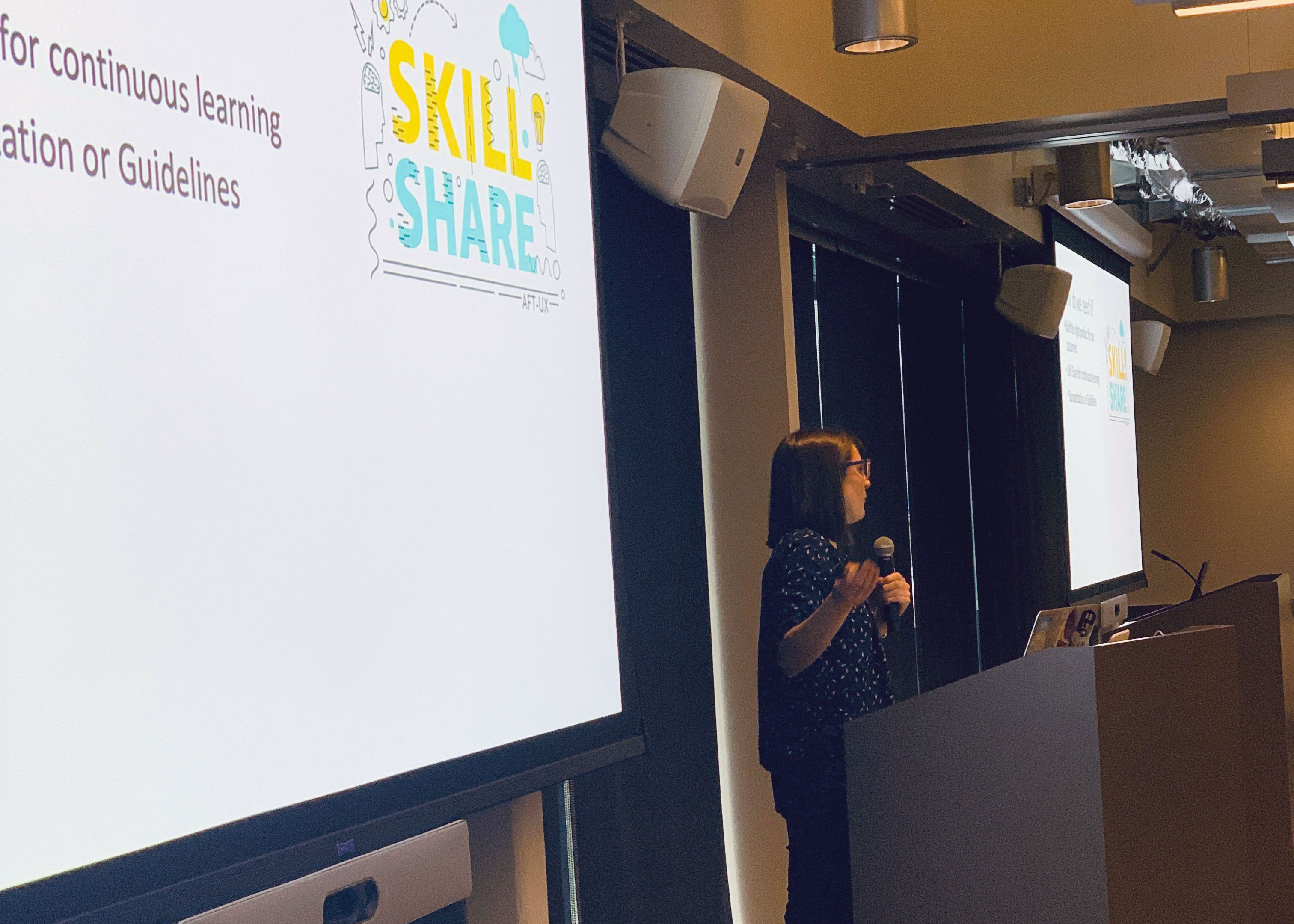
Everyone Has Something to Share
Skill Share started with a pretty simple idea: everyone has something they can teach, and everyone has something they can learn.
The goal was to create a space where people could share knowledge that might help others design and build better products. For presenters, it was also an opportunity to practice speaking, share their expertise, and get their work in front of a broader audience. For everyone attending, it was a chance to see what other teams were working on and learn something they could potentially bring back to their own work.
As we described it in our invitations, it was an opportunity to be informed, learn new skills, fine-tune old ones, and get advice from peers.
Creating a Format That Could Keep Evolving
We kept the format consistent enough that people knew what to expect each month, but flexible enough that the content could change depending on what people wanted to share.
Anyone could sign up to present. Topics included product launches, behind-the-scenes case studies, new tools and processes, lessons from conferences or classes, and cross-functional presentations where designers partnered with product managers, engineers, analysts, and others.
That variety was intentional. One month, a team might walk through how they approached business planning. Another month, a designer might share how they automated part of the localization process across markets and languages.
The topics didn’t need to be connected. What mattered was that someone had learned something useful and was willing to share it with the rest of the community.
The Hard Part Was Keeping It Going
Putting together one session wasn’t particularly difficult. Keeping it going every month for several years was the real work.
There was always another session coming, which meant continuously finding presenters, making sure we had a variety of teams and perspectives represented, communicating upcoming sessions, and sharing recaps afterward.
We also recorded sessions and archived presentations so people who couldn’t attend live could still access them later. It meant the knowledge being shared didn’t disappear when the meeting ended.
A lot of that work happened behind the scenes, but it was what kept Skill Share going month after month.

More Than a Monthly Meeting
What I valued most about Skill Share wasn’t just how many people attended. It was seeing people learn about work happening outside their own teams and make connections they might not otherwise have made.
Designers found other designers working through similar problems. Teams discovered tools or approaches that had already been tried somewhere else. Presenters had a place to share their expertise and, for some, an opportunity to become more comfortable presenting their work to a larger audience.
Over time, Skill Share became more than a monthly calendar invite. It became one of the ways we helped people across a large organization learn from each other and feel more connected as a design community.
What I Learned
Looking back at the years I ran Skill Share, a few things stand out to me:
Make it easy for people to share what they know. You don’t have to be the designated expert to have something valuable to teach. Some of the most useful sessions came from people simply sharing something they had learned through their work.
Consistency matters. A monthly program only works if people know it will continue to show up. Keeping that rhythm helped Skill Share become something people recognized and expected.
Save what people share. Recording sessions and keeping the materials organized gave people a way to learn even if they couldn’t attend live, and it gave useful content a much longer life.
Give people opportunities to connect. The content brought people into the room, but one of the most valuable outcomes was helping people discover others across the organization who were working on similar problems.
For me, Skill Share reinforced something I’ve carried into a lot of the community-building work I’ve done since: you don’t create a learning culture by saying people should share more. You have to create the space for them to actually do it, and then keep showing up.
If you’re building a learning community of your own, I’d love to compare notes.

